Go GREEN. Read from THE SCREEN.

Writing from The Heart

Writing from The Heart
Design and execution by Meeko Marasigan

Writing from The Heart

"Writing from The Heart" is a workshop on creative writing, creative drawing, and creative drama. There are three available versions of this workshop: one for beginners on the secondary, tertiary, and graduate levels, and another for practitioners. A third version of this workshop is designed as an outreach program to disadvantaged and underserved audiences such as the disabled, the poor and the marginalized, victims of human trafficking, battered women and abused children, drug rehabilitation center residents, child combatants, children in conflict with the law, prisoners, and gang leaders. This third version incorporates creativity and problem awareness, conflict resolution, crisis intervention, trauma therapy, and peacemaking.
CURRENT ENTRIES:

Thursday, August 20, 2015

From the TheatreWorks Singapore Writing & Community blog:


In conversation with the playwrights from Writings from The Heart: Part 2

Just as the plays in this weekend’s Writing from The Heart are diverse in its subject matter and explorations, so are the playwrights who wrote them. Gabriel Lim is an avid theatregoer who occasionally indulges in painting, photography and writing and is currently exploring archived material in the 90s regarding Forum Theatre and Postmodernism. Likewise, Helmi Yusof is a journalist at The Business Times, covering arts and culture and has written on the arts and entertainment scene for various publications, including The Straits Times and Arena men’s magazine.
Drawing on their personal biographies and histories, each of their plays reflect a strong unique voice. When asked whether the characters in their plays were an extension of themselves, Gabriel shared how fragments of his characters represented certain personal moments in his life. His characters then allows him to revisit those moments and the choices he made, and rationalize the issues on a larger, universal scale through his play. On the other hand, Helmi’s was a personal response to the controversy of the National Library’s withdrawal of childrens’ books containing LGBT characters and single mothers as it was deemed unfit reading material for children. In the interview, he lets on a little fun fact as well: “I’ve only cross-dressed once in an all-boys school play. But I’m guessing somewhere in the recesses of my psyche there’s a sexually-frustrated 60-year-old woman and man in drag.”
When asked about how attending the Writing from The Heart programme mentored by Tony Perez helped them develop their scripts, both shared similar sentiments about him, saying that he was a wonderful mentor, with Helmi adding how he was thoroughly unconventional and intuitive. He described the workshops as “talking about everything from chakra points and meditation to Freud and Jung” and how one needed to have an open mind during these explorations. For Gabriel, he never expected a workshop to introduce such topics, but those avenues formed the basis for him to get really creative in his writing. It also served as a reminder for him to write with his gut feeling and see where it took him.
They also felt that such programmes were important because from Gabriel’s perspective, it provides a creative space to develop artists as well involving the community in its process. He adds on, “Theatre came from the people, the community. And we can all agree that the theatre as an art form is a great way of expression and to facilitate discussions.” Helmi agrees but highlights how a longer-term engagement – one that lasts over 5 to 10 years- may be necessary for a writer to find their voice. He goes on to say however, “Unfortunately, few theatre companies have those kind of resources.”
With their plays ready for this weekend, I asked if they would continue writing after the end of their programme, to which I received enthusiastic yeses. For Gabriel, he intends to find his eventual style of writing a play and Helmi, “If Tony Perez returns for another week-long engagement, I’ll definitely sign up.”
From the TheatreWorks Singapore Writing & Community blog:


In conversation with the playwrights from Writings from The Heart: Part 1

Between the three of them, it would seem as though they would have nothing in common- Lishan is an administrator working in mental health services planning and development, Samantha is freelancing as a stage/events manager and Serene, is an accountant. Yet, they share a strong passion for expressing their creative sides through writing and hold on to the belief that writing is a means to explore,  understand, reflect and reconcile issues within oneself and society.
Tapping into their personal biographies and histories, each of their plays reflect a strong sense of individual identity. When asked whether the characters in their plays were an extension of themselves, Serene shares how she has a habit of people watching and develops her characters based on her observations of their speech, behaviour and idiosyncrasies. Likewise, for Samantha, her characters are based on a mish mash of people’s experiences and shared stories.
With writing comes its challenges, and both Lishan and Serene experienced difficulties during their time of developing their script. Despite Lishan’s experience in writing a book titled “A Philosopher’s Madness” as well as publishing non- fiction articles in the opinion sections of The Straits Times and The Business Times, she shared how writing dialogue was personally challenging for her because it does not come as easily. On the other hand, Serene found that writing her second draft of the play was more challenging than the first because she grew attached to her first draft and found it difficult to trim lines.
When asked about how attending the Writing from The Heart programme mentored by Tony Perez helped them develop their scripts, both Serene and Samantha agreed that it provided a platform for them to write from a more honest and “real” point of view. A memorable moment for Serene was the “Emotional Truths” session during the workshop where it allowed them to be in touch with their raw emotions, giving way to a better understanding of characters and developing dialogues. As she elaborates, “As long as our characters speak words true to their emotions, the dialogue delivered to the audience will come across as genuine and believable. The emotional truths breathe life into the characters. I guess this is what writing from the heart is all about.” Scripts aside, Lishan mentioned that the workshop also made way for a better understanding of herself.
They also felt that such programmes were important because it provides a platform for playwrights to have a taster to the process of writing and developing plays and stressed the importance of receiving feedback as a means to improve and make progress in their scripts. Or as simply put by Lishan, “Important, because, sometimes, we just need a kick in order to get writing!”
With their plays done and dusted for this weekend, I asked if they would continue writing after the end of their programme, to which I received three resounding yeses. Serene left with a parting word of advice for all the aspiring playwrights out there: “I would encourage anybody interested in playwriting to participate in such programmes.”
From the TheatreWorks Singapore Writing & Community blog:


20150711_220218

It’s A Wrap! Writings from The Heart

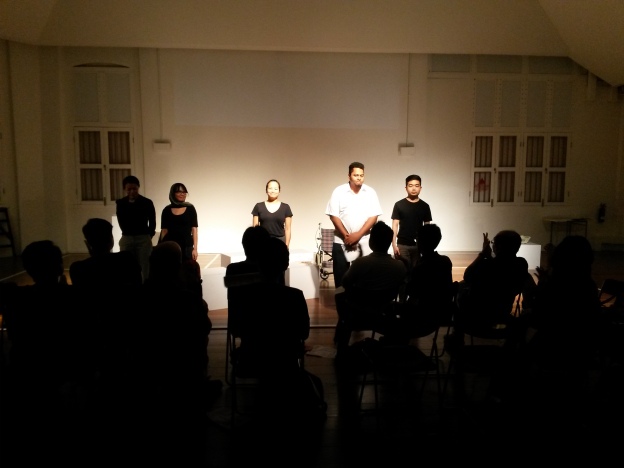
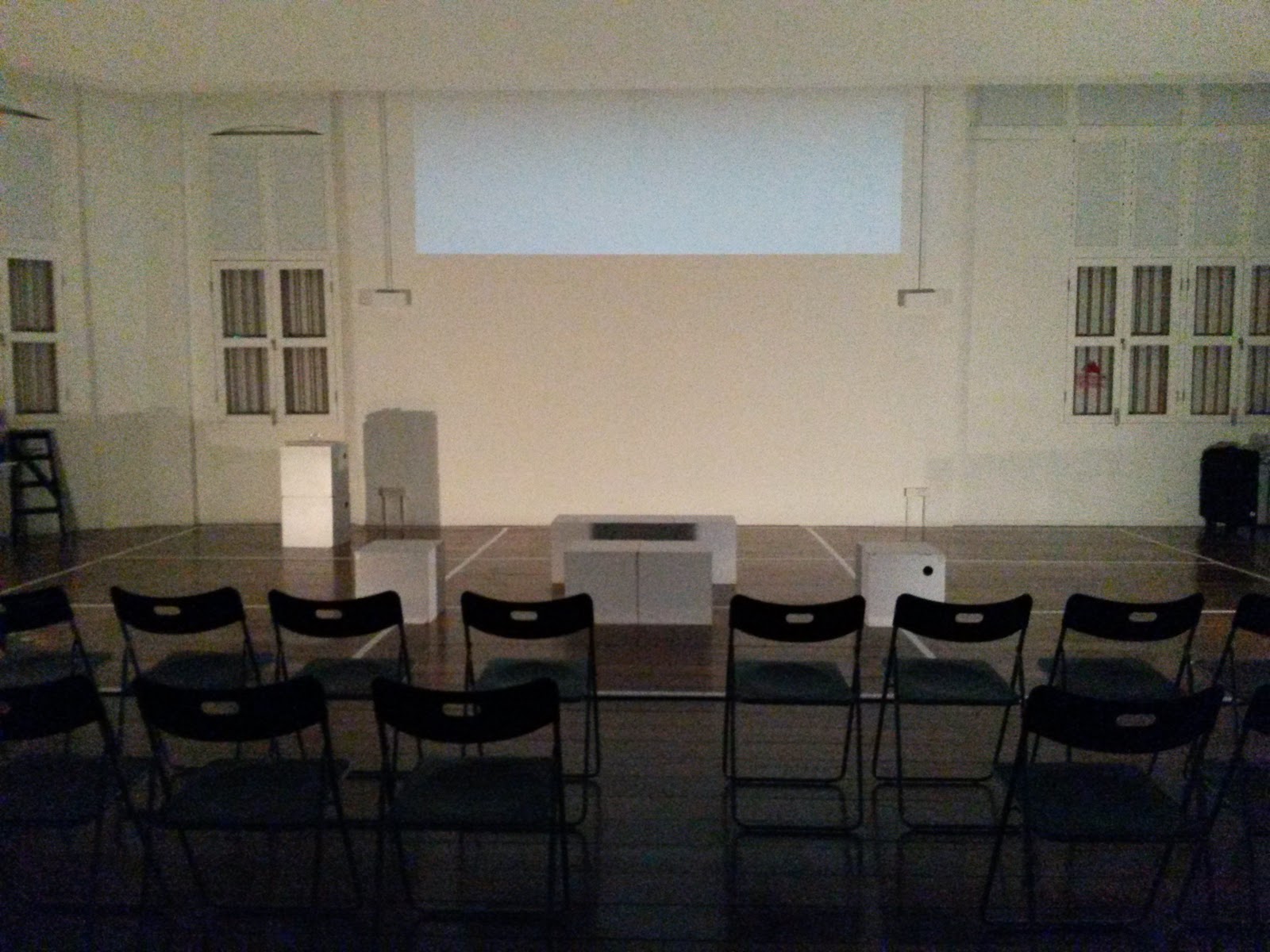
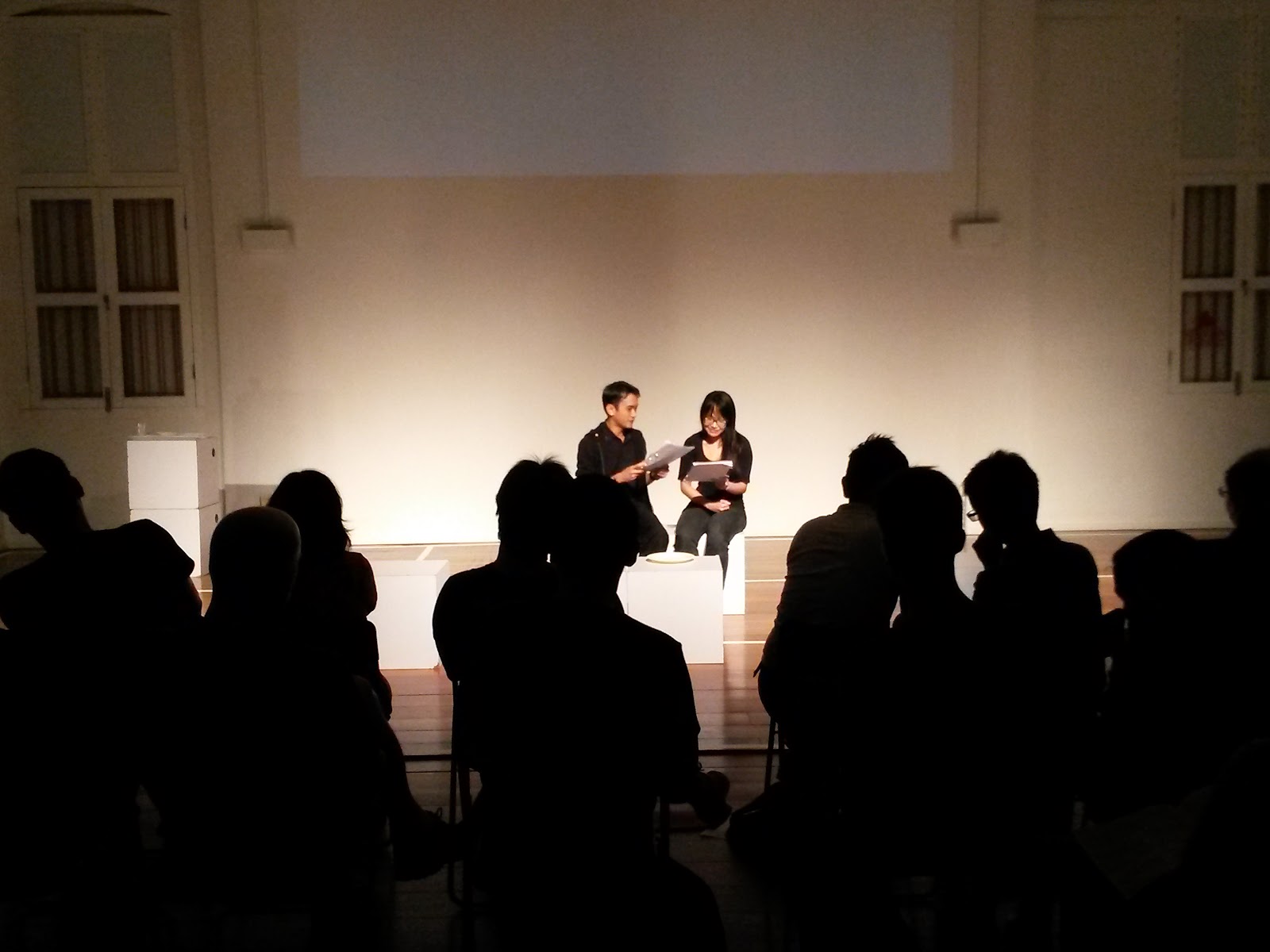
These were not your usual “polished” looking plays. There was no complicated lighting design, no elaborate set, no intricate costume- it was pared down to the essentials. After all, the focus of the weekend was providing a platform for playwrights to receive audience feedback as a means to improve and make progress in their scripts.
20150711_193753.jpg
Writings from The Heart was a platform for the writers to experiment with no holds barred on their writing. Tony Perez’s workshops were highly unconventional- covering chakra points to meditation. With such atypical avenues to approach writing, there was still an emphasis placed in creating honest dialogues and characters. This, I felt, made the plays more accessible for the audience, even if they could not relate to what was being presented onstage. I also found that each play showcased their personal voice and allowed them to rationalise their experiences and thoughts on a larger scale through writing.
20150711_203703.jpg
For our audience members and playwrights that attended Writings from The Heart over the weekend, they felt that this was an important platform to showcase the playwrights, their works and develop the arts and social scene in Singapore.
Our audience shared,
“It fulfils its role of unearthing budding writers where some of the voices hope to be heard but do not know how to.”
Liow De Jun, playwright, 10 July
“Through developing a pool of emerging playwrights, it is a very important platform for developing Singapore’s art scene. We can have more local plays to celebrate with!”
Michelle Kee, 10 July
“This allows certain hopes that are out of bounds in Singapore’s mainstream media to be explored.”
Cheong Poh Kwan, 11 July
“It gives a safe non-judgemental space for budding playwrights to explore, fail, and explore again. Kudos to the playwrights for stepping up and stepping out.”
Dawn Lau, 11 July
“It provides a platform- that is the most essential thing. The presentation (in the form of a read), the promotion of new work- all help!”
Hemang Yadav, 11 July
Across the two days, the diversity of the plays presented issues ranging from the personal to the public- the expectation of women in the family and work, the dynamics of intergenerational relationships, the stigma faced by foreign and domestic workers- just to name a few. The plays were not merely an expression of the playwright’s personal voice but contained underlying messages resonating with immediate society. Through Writings from The Heart, it allowed for these distinct individuals to share their perspective of how they perceived their community.
Our audience members also had a chance to reflect on how the plays resonated with them and in the context of larger Singaporean society.
Our audience shared,
“My Father Wears Bras touches on the topic of cross dressing acceptance in Singapore which are questions/ themes I have been pondering about.”
Ayaka Ajiki, 10 July
“The themes of stereotypes and social expectations was relatable.”
Siu Tong Wong, 10 July
“I liked how Helmi’s play showed an attempt to normalise the transcommunity.”
Khai Khalid, 10 July
“I thought the theme of stereotypes, sexuality is something that can really invoke some meaningful, diverse interpretation and emotions. I see that as an entry point to read a person’s principles and belief he has. Seeing those come together in a safe space creates content and something to use.”
Liow De Jun, playwright, 10 July
“Current issues in Singapore were brought out in the plays.”
Faizal Masjudi, 10 July
“I liked the idea of exploring societal expectations and materialism in a Singaporean context.”
Kamil Ghazali, 11 July
“The plays had a strong local flavour that is usually not so present.”
Alex Huang, 11 July
“Interesting vignettes and perspectives that are a commentary on society.”
Arula, 11 July
20150711_220218.jpg
Concluding the experience at Writings from The Heart, it was an engaging two days that presented experiences, perspectives and issues which opened up avenues for discussion and engagement between the writers, the audience and the community we live in.
Stay tuned for more updates from the Writing & Community Blog, with the Post Show Discussions coming your way!

From the TheatreWorks Singapore Writing & Community blog:


20150711_193753

We Discuss Writings from The Heart

During the post show discussion, the playwrights were asked about their Writings from The Heartexperience. The playwrights agreed how the entire experience had been interesting and useful for them to develop their plays as well as find their own voice and perspective on the issues they wanted to write about. The playwrights shared with us how the entire process was like.
11012789_1650541428526377_1362568968455993773_n
It was rather refreshing, considering I usually indulge in writing poetry. I gave myself ample time alone and I drew out different permutations to approach my script, before considering how I can piece the different scenes together. You could say it was rather sporadic too.
Gabriel Lim, playwright of We Fell in A Marathon
Tony Perez is a wonderful, thoroughly unconventional and intuitive teacher. He talks about everything from chakra points and meditation to Freud and Jung, and you’re asked to try them out in class, so you have to have a very, very open mind.”
Helmi Yusof, playwright of My Father Wears Bras and My Mother Buys Condoms
“It has been quite exciting. We’ve had closed door readings before this which is very useful. For me this has been a great experience for me to see actors mouth the lines that I wrote and see some choices that I did not imagine. That has been very interesting as a process. Writing on stage can be quite challenging.”
Mayura Baweja, playwright of Paper Thin
“The process was both enjoyable and challenging.  As my play is a comedy- drama, I had a lot of fun introducing humour into my writing. The second draft was more challenging to write than the first. I grew  attached to what I wrote in the first draft and found it difficult to trim lines while retaining the essence of my play. However, one of the participants from the workshop offered me some words of encouragement. I eventually completed my second draft and felt a great sense of accomplishment at the end of it.”
Serene Tan, playwright of Hazy Prenuptials
“I don’t know how to write dialogue and it is extremely challenging for me. The workshop actually did not touch so much on writing or the craft of playwriting but a kind of understanding yourself, finding your voice kind of workshop.”
Chan Lishan, playwright of Conversations with My Father
“What’s more important for me is getting more opinions, getting some friends to comment a little and hear their true voices and I think that process of bouncing ideas, getting feedback, building on from there is what I really like about this whole process”
Liow De Jun, playwright of My Promise to My Animal Tamer
“It was a slow process. So it was helpful throughout the process some playwrighters got together to share after the closed reading session and it helps to share ideas.”
Samantha Chia, playwright of No Regrets
WritersTalk3
The post show discussion was also an avenue for societal issues to be raised up. In all the plays, the characters were a reflection of actual individuals in society and became a point of commentary. For Helmi, he wrote his plays in response to the controversy of the National Library’s withdrawal of books containing LGBT characters and single mothers. He expressed his concern over the violence (physical or otherwise) faced by the transcommunity and how they are an easy target. This is represented through the two characters in My Father Wears Braswhere a transgender character named Jac is the target of violence from Ba’s homophobic son, Danny. Discussions were raised about the portrayal of Danny as the audience felt he was too one- sided, with his only violent and rash nature. Other comments included how the portrayal of the characters in the play were binary- the male encapsulating alpha male traits and the woman being feminine and emotional- because personalities are not always black and white.
Helmi’s other play, My Mother Buys Condoms, highlighted the lack of respect for individual rights and decisions. Maggie is a Chinese retiree in her 60s who decides to have a sex life again- her decision to have a relationship and companion then leads to her being ostracised. In the post show discussion, he highlights how her leaving home is symbolic of the LGBTI emotional experience-  they feel that they do not belong and hence leave the home. The reactions from the neighbours also highlight how Helmi feels that the country has low tolerance for people who are different.
The discussion of whether the characters such as Wilfred, Maggie’s son, and Madam Nora, her close friend are one dimensional was brought up. The two characters have and hold on to strong religious beliefs which creates a rough patch amongst the characters. This conflict is shown through how these individuals are not merely one sided but have their own struggles and beliefs they want to stand by. We are shown how they have not come to terms with Maggie’s decision, and attempt to voice their opinions to convince her otherwise, highlighting how there is a difficulty to reconcile these differences and the inability to respect the decisions of another, much like the conversations surrounding Pink Dot.
WritersTalk2
Likewise, the characters also are a point of commentary for societal issues. Serene’s play, Hazy Prenuptials is about how soon to be bride Grace is trying to plan the perfect wedding and documents it on social media to incite the envy of others, highlighting the materialism and sometimes excessive consumption present in Singaporeans. Serene uses her to illustrate how technology brings people together and provides a channel of communication. Yet, it creates a disjuncture and feeds into the intergenerational disconnect she has with her parents. Grace is too caught up with appearances and uses social media to engage with the wrong audience when such efforts should be invested in her relationships. This is an issue in our society nowadays where engagement with social media and being in connection borders on obsession.
On a more domestic note, Liow De Jun’s My Promise to My Animal Tamer highlights the relationship between a single mother and child- and later on loses her son and her grandson. During the post show discussion, director Irfan and actor Daphne highlighted how the mother should also be given attention, especially since she too experienced big losses in her life and her character can be a point of discussion for single mothers in Singapore and the hardships they face.
To wrap up, the weekend from the Writings from The Heart was an important platform for finding, developing and nurturing new writers from the community. From the plays shown in the weekend and through the post show discussions, it  became a catalyst for the audience to reflect and discuss important issues related to living in Singapore.

Staged Readings at TheatreWorks Singapore of Plays by Emerging Writers

Congratulations to the first group of playwrights of the "Writing from The Heart" workshops sponsored by TheatreWorks Singapore! We are all honored to have their readings staged within the 50th Year Celebration of Singapore!


From the TheatreWorks Writing & Community blog:

"We Discuss Writings from The Heart"
https://writingandcommunity2015.wordpress.com/2015/07/30/we-discuss-writings-from-the-heart/

"It's A Wrap! Writings from The Heart"
https://writingandcommunity2015.wordpress.com/2015/07/28/its-a-wrap-writings-from-the-heart/

"In Conversation with the Playwrights from Writing from The Heart, Part 1"
https://writingandcommunity2015.wordpress.com/2015/07/16/in-conversation-with-the-playwrights-from-writings-from-the-heart-part-1/

"In Conversation with the Playwrights from Writing from The Heart, Part 2"
https://writingandcommunity2015.wordpress.com/2015/07/16/in-conversation-with-the-playwrights-from-writings-from-the-heart-part-2/


Wednesday, August 19, 2015

Write against all odds, especially those that are merely created by other people.

Thursday, August 13, 2015

Write, no matter what.
It can be most satisfactory to write only for oneself. That way it really wouldn't matter to you whether others read your works or not and, should they do so, whether they like your works or not.

Thursday, August 6, 2015

"A writer takes his pen/
To write the words again/
That all in love is fair/"

--Stevie Wonder
The secret to blogging is in writing not for audiences in the present time but writing for audiences in the future, including audiences that will open your blog long after you have gone from this lifetime. Otherwise your blog becomes mere ephemera.

Monday, August 3, 2015

Anything written follows conventions and patterns, both of which its writer was unconscious of, and can therefore be subjected to analysis.

Thursday, July 30, 2015

Write what you want to write, not what others want you to write, and write as much as you want to.

No individual, group, institution, community, society, or nation can ever succeed in tearing down a true artist.

Monday, July 27, 2015

It is difficult to respect literary critics who are heavily in debt, have vices, live in destitute homes, and have dysfunctional relationships.

Why don't they fix their lives and situations first before anything else?

Sunday, July 26, 2015

A fountain pen is a writer's jewel. That is why many writers keep more than one fountain pen in their treasury.
Write, and keep on writing.

Do not allow critics to tell the world what literature should be.

It is the writers who should be doing that.

Saturday, July 25, 2015

It is not so much what a writer really writes but what he really means that counts, because everything is within a particular context.
Using a fountain pen is the ultimate reflection of a writer's sophistication.

Friday, July 24, 2015

Devote most of your time primarily to your family and only secondarily to your art.

You can create as much art as you want for yourself, but God creates for you only one family.
There are art academies and creative writing centers, but all these teach theory, history, materials, and techniques. Graduating from these institutions means nothing if the graduate's art does not come from his heart, for only when it comes from his heart is it authentic and original.

An artist draws his personal truth only from his heart, and his social truth from his firsthand experiences. He otherwise becomes a collective carbon copy of all the teachers he ever had.


Many of my contemporaries believe that to be published, to be awarded, and to have one's plays produced are the hallmarks of a successful writer.

Having been there and done that, a successful writer, to me, is someone who writes whatever he wants no matter what and whether his works will be published, produced, or not, AND, AT THE SAME TIME, not be a starving artist but one who enjoys life, has a good house and home, has a good family, buys whatever he wants, and is able to STOP WRITING AND DO SOMETHING ELSE at any time.

Why write AT THE EXPENSE OF ALL THOSE THINGS I MENTIONED? It doesn't make sense.

Wednesday, July 22, 2015

When someone criticizes your work, write ten more works.

Never let criticism stop you from writing, even if it means writing what other people hate. That would be like having a car mishap and never driving again.

Saturday, July 18, 2015

Writing is everyone's final duty, for it is writing that records history.
Your e-mail message:

"Hello sir here I am again  full of questions. Your suggestion sir about sublimating helped me a lot. I chose sir to write stories. Fictional stories. 

"I love stories sir for they helped me live in this world more , to keep me more in tune with my surroundings; fiction they may be but  believe that fiction consists of lies that tell the truth. Fiction released from me my animal desires. It feels like I am purging my darkness. 

"But sir I have been suffering these anxieties and ocd  and I have tried sports as a sort of relaxation  but still stories are the best for me. 

" Suddenly sir I have had this thought: why do I care about my characters if they are not real? They are nothing but the products of my imagination and that line of thinking has caused me to fall into a sort of pseudo metanoia  . I know deep down that these thoughts are valid but I still choose fiction or stories as the outlets for my confessions. 

"Could you recommend sir anything? Any methods?  or maybe  I am just over thinking.

"thanks sir."


My reply:

Hello _________________!

A writer is a god who creates a world and populates it with his characters, all of whom are extensions of his Inner Self. It is natural for a writer, therefore, to care a lot not only for that world but for the characters he designated to live in that world.

Always alternate writing with reading or some other activity, such as sports. Sometimes you need to rest from what you like doing best.
Paint, and paint as well as you can, but do not get fixated on it. Your next obligation is to write.

Tuesday, July 14, 2015

Ordinarily, everyone needs to undergo secondary reflection in order to remember, backtrack, or retrace something.

Creative writers, however, need to undergo tertiary reflection in order to produce their works.

Saturday, July 4, 2015

Saturday, June 20, 2015

Many of my co-writers are frustrated with their attempts to use dip pens, because they use the pens straight from the box out of ignorance.

Before dip pen nibs are delivered from the factory, they are brushed with linseed oil to prevent corrosion while they are in transit, in storage, or in shop window displays. The film of oil dries and hardens to a fine gel.

Before using a dip pen nib, therefore, first wipe it thoroughly with lighter fluid or turpentine. And then use it--the ink will then flow smoothly.

Friday, June 12, 2015

Art changes because values change.

Values change because art changes.

Tuesday, June 9, 2015

There is nothing quite as precious as a clean sheet of paper and a pen in your hand, waiting for the reality of your thoughts to become the reality of your words.

Tuesday, May 26, 2015

Your creative unconscious responds to the color of your ink. When experiencing "writer's block," switch to a different ink color, e.g. from black to blue or from green to red. Try purple too!

Of course, for a default color, there is nothing quite like black.

Sunday, May 24, 2015

A story writes itself without your having to get stressed over it.

Sunday, May 17, 2015

Sunday, May 10, 2015

Whenever you are unable to write, it is because it is time for you to read.
Never write or paint to music--it will interfere with the creative process of your psyche. Long after your work is done, you will find it difficult to recapture your original, creative state and will find it almost impossible to revise your work satisfactorily, if you have to.

Always write or paint to silence, for it is only in silence that you can listen attentively to your heart.
Creativity is born of inner suffering and hardship more than it is born of satisfaction and contentment.

It behooves the creative person, however, to seek balance and inner peace from time to time, so that he does not go over the edge and push his creativity to the realm of destruction, for only a thin line separates the two.

Wednesday, April 22, 2015

Wednesday, April 8, 2015

To write from the heart is to write from a state of love, for there is only one emotion, and that emotion is love.

Friday, March 27, 2015

Wednesday, March 25, 2015

A writer is never bored even when waiting. All he/she has to do is pick up a pen and write.

Tuesday, March 24, 2015

Open a blog and document your life and your works in a diary. Even if no one reads it, it will pay off in the long run. As a matter of fact you may even set it so that only you can read it.
Writing is neither a hobby nor a career. It is a lifestyle, because only then does it truly engulf one's mind, heart, and soul.

Dramaturgy for Shen, Isaac, and Ahmad (March 20, 2015)


Photos by theater management intern Atiqah Majid


Dramaturgy for Shen was done via a long-distance call, since she was in Melbourne en route to Tasmania on an adventure.


Isaac


Ahmad


A writer who shares nothing is an unsuccessful writer because, unbeknownst to him, he also shares nothing with himself.

Monday, March 23, 2015

Workshop for Singaporean Children (Ages 7 - 14) for South East PSG Family Camp at Changkat Primary School, Bedok (March 21, 2015)


During this workshop I used the publication Inang Bayan's New Clothes, easily adapting its messages to the Singaporean setting, especially on the occasion of the country's year-round celebration of its independence. 

The story book and exercise sheets imparted to the participants:

--The importance of a written story
--The possibility of adapting a story set in another country to one's own country
--The symbolism of color
--Historical and cultural influences on costume
--Combining pieces of apparel to create different appearances
--Imagining a symbolic dress for one's mother, grandmother, or sister
--Imagining a symbolic dress for one's mother country
--Appreciating a story while engaging visual-motor skills
--Appreciating not only one's own work but the work of others as well
--Working in groups, or teamwork


Workshop for Singaporean Senior Citizens, Seniors' Learning Camp Alumni, at Lifelong Learning Institute (March 19, 2015)


Saturday, March 21, 2015

A director must know his playwright before staging his/her play. Otherwise that would be like curating an art exhibit without knowing anything about the artist.
Theater is a necessary art. It can never be replaced by any other medium or any other form of art.

Saturday, March 14, 2015

You are defined not only by what you choose to read but by what you do not choose to read as well.
The perception of literature changes as one's mind matures.

That is why it is a bad idea to:

--Be a "tabloid" writer, i.e. a writer whose works revolve around current issues that eventually become passe.

--Be a "cool" juvenile writer, because all audiences, and the writer himself/herself, eventually grow up.

Tuesday, March 10, 2015

Dramaturging JR's Screenplay

"Isla del Fuego"

Hi JR!

First of all, are you sure you want to use this title? This is the title of Eve Mascunana's book, and people might expect your film to be a version of it. Moreover, your film is not about the entire island but about one particular young woman on the island.

The entirety of your screenplay, however, and the story are very interesting. Your film promises to be several notches above the works of everyone else who owns a video camera.

Your main problem is dialogue. Your characters talk when they do not have to, and when mere close-ups would suffice. And, when they talk, they don't talk the way people do. For example, no one really uses the word "ngunit".

In the beginning of the screenplay, the mother says, "Anak, gising na. Baka tanghaliin na tayo sa pagpunta sa Dumaguete." In real life the mother would simply say, "Gising na!"

The girl's response is equally unrealistic: "Pasensya na po, Inay, napasarap lang po ng tulog. Mag-aayos na po ako." In reality the girl would simply rise, say nothing, and go to the bathroom.

In Seq 20 the cashier confesses that she really knew nothing when she applied for her job. No personnel manager would ever hire someone with no background for a cashiering position.

You have many dream sequences but you describe only the ones toward the end of the film.

Seq 31-B is your real point of attack. It is when your story begins. Nothing has been happening so far except to provide a backdrop for the story.

Try to avoid contrived situations that are mere tricks to push your story forward: the mother's sprained ankle, missed boats, etc.

If the grandmother is truly an effective healer, why couldn't she have healed the mother's sprained ankle immediately?

Be aware that Siquijor is an herb-and oil locale. The magic practitioners there never use talismans or medallions.

The ending is not optimistic. You should show what Dada proactively decides to be. Following your story, she should embrace her future as a sorceress. As it is you leave her in a psychologically comatose condition.

Give closure to the other characters as well: Bea and Pao especially.

I see your passion in your screenplay. Although this is about a turning point in a young woman's life, it is really about your discovery of Siquijor and Dumaguete and the marvelous things you found there. Go for it, and I wish you the best of luck!

Tuesday, February 17, 2015

It is impossible to prevent other people from reading any piece of writing.

It is equally impossible to tell a writer what he should write.

Friday, February 6, 2015

A writer without a personal worldview, no matter how much you'd disagree with it, is not worth reading.

Thursday, February 5, 2015

Dramaturgy for TheatreWorks Singapore: Gabriel

"We Fell In A Marathon"

Hello Gabriel!

This version of your play is so much better, and so much more effective, than the first.

Your point of attack is perfect. Dramatic action begins and moves on swiftly.

Dialogue: It is Anthony who is the poet. Be wary of how the other characters speak. On Page 2, Fifth Line from Bottom, for instance, Mr. Seow says, "It's either you submitting to me or that." In a normal situation, a man would blurt out spontaneously, "Give me what I want!" or "Give it to me!" (Or something more explicit than that.) There is something primal about your subject matter, represented by Mr. Seow, and he should speak accordingly.

You have cleverly gotten rid of cell phone conversations. Congratulations.

I commend your work because it has become more honest and more emotionally truthful. It is no longer hampered by the masks and disguises that you endowed the first version with.

There is, however, more work to be done:

--You need to develop all three characters, particularly their historicity: Where are they coming from? Where are they going? What do they really want? Otherwise the audience will find it extremely difficult to sympathize with any one of them. This will make your play longer and fuller.

--Your ending is ambiguous. The ending should give closure to all three characters, not just Anthony. The audience will also want to see, comprehend, and understand what is in the letter.

You've stepped from the shore into the water. Now go for the deep end.


Write and paint because you MUST, without thinking of how much money you can immediately or eventually make out of your work.

Writing for money and painting for money change the quality not only of your work, but of your artistic soul.

Tuesday, February 3, 2015

There is really only one way to improve your writing or your drawing by leaps and bounds, and that is to practice it eight hours a day.

Sunday, February 1, 2015

When writing or drawing, the hand of your teacher should never be evident.

Friday, January 23, 2015

Dramaturgy for TheatreWorks Singapore: Helmi

"My Father Wears Bras"

Hi Helmi!

I enjoyed reading your play. Comedy is your forte. This would make a wonderful twin-biller along with "My Mother Buys Condoms", in the sequence in which you wrote them: "Mother" first, followed by "Father". The result would be a theatrical diptych that would comprise a pleasant evening for the audience.

I have a few comments:

--The title is written from the point of view of SON, but SON is absent from the stage most of the time. He is one-dimensional and only serves as a foil to provide plot tension.

--"PLU" (in the Philippines anyway) means "People Like Us", not "People Like You".

--The ending is quite unfinished--perhaps because you didn't know exactly how to end the play? There is closure for BA and SU, but no sufficient dramatic change for SON and JAC. They go back to Square One--a no-no in dramatic writing.

I hope you are able to re-work this play. Afterward, send a copy of BOTH "Mother" and "Father" to TheatreWorks.

Wednesday, January 21, 2015

Dramaturgy for TheatreWorks Singapore: Mayura

"Paper Thin"

Hello Mayura!

I enjoyed reading this version of your play. It is tighter and clearer, though still heavily dependent on technological aids. It is, however, a nice poem-for-performance and a commentary on gender, reality and stage reality, and unreality.

Go for a reading at this point, and listen to how the dialogue flows.

You may submit this to TheatreWorks after you are satisfied.

Dramaturgy for TheatreWorks Singapore: A Message for All

Hello Playwrights!

Just a short message I'd been meaning to impart but kept neglecting to:

While I dramaturge your work, I do NOT proofread it for spelling, grammar, syntax, and idiomatic sense. All these should be clarified and corrected during the reading, rehearsals, and final production, and only after then should you work on encoding a definitive, publication-ready copy.

Dramaturgy for TheatreWorks Singapore: De Jun

"My Promise to My Animal Tamer"

Hello De Jun!

I enjoyed reading your play. It is very poignant and unusually mature (considering that you are just 16, I mean).

Here are my comments:

--It is difficult to cast a ten-year-old child in a play for various reasons. Be prepared to have the role played by a young man onstage.

--Incorporate more stage directions and scene descriptions. This should make clear to you where action takes place and how characters transit from one scene to the other, especially if they have to change or add items to their costumes. The director and the scene designer may or may not envision the play as you do, but at least you should proffer yours while they are reading it for the first time.

--Your ending is abrupt. It should give closure to all three characters. I suggest that each character be given a monologue that addresses either the audience or themselves.

Please sned me back the play with a fuller ending.

Tuesday, January 20, 2015

A good disposable pen that can substitute for a fountain pen--because its ink is highly fluid--is Pilot V Ball Extra Fine.

Be careful, though--it has a fragile nib and gets ruined when you drop it on its nib or apply too much pressure.
A writer is also a reader and, as a reader, should be able to peruse another's work and tell, by the writing, whether the author was healthy or ill, sated or hungry, focused or distressed, merely by means of the passage of writing. A reader should also be able to tell which of the myriad of emotions was dominating the writer's heart.

Reading is one of the best exercises in writing.
A writer who paints will prefer to hold his brush like a pen.
When a writer rests, he reads.

Tuesday, January 6, 2015

As in painting and in cooking, teaching students all of your creative writing secrets and techniques is no assurance that they will write the way you do, for the very reason that they have inherent, individual styles.

Monday, January 5, 2015

Dramaturgy for TheatreWorks Singapore: Beverly (Four-Character Version)

"Untitled"
Version with four characters

Hello again Beverly!

This version seemed more promising because you present not only two kinds of men but two kinds of women. However, the Wife is underdeveloped and simply drops out toward the middle of the play. I realize that it will take a lot of work to flesh her out and carry her over through the end--and making this a long, full-length play--and so let us go with the version that has only three characters. It is tight and complete, and does not have the melodramatic flair that the addition of the Wife gives us.

For I now realize that this play is not about any of your past loves.

This play is about your two real lovers: Lucre (Dan) and Literature (Man), and how you are constantly torn between making money and living a comfortable life and following your heart and barely surviving.

Indeed, please prepare a clean copy of the three-character version and submit it to TheatreWorks Singapore.

Dramaturgy for TheatreWorks Singapore: Beverly (Three-Character Version)

"Untitled"
Version with three characters

Hi Beverly!

I will read the version with four characters in a while.

In the meantime here are my comments on this version:

--The play is excellent. It is a thorough and mature articulation of love between adults in relationships and a serious attempt to arrive at a definition of love.

--Page 5, Line 13: The line is not too extreme. It is, actually, your point of attack.

--Page 7, Line 9: Not contrived.

--Page 8, Line 13: The alternate wording is better.

--Page 31, Line 2: It will become evident during the performers' reading, which is when a playwright adjusts his dialogue, but always be alert to theatrical phraseology. Your line "Besides your art" will not project well inside a theater. Rewriting it to "Aside from your art" will. Recite the two and hear the difference.

--Page 56, Lines 1 - 4: Delete.

--Page 62, Lines 9 - 10: Dialogue is better as opposed to mimicry. Mimicry does not go with Dan's character.

--End of play: Beautiful! The first ending is so much better; the second, lame.

You may proceed to make these changes and present a clean copy to TheatreWorks Singapore.

Dramaturgy for TheatreWorks Singapore: Serene

"Together Apart"

Hello Serene!

I enjoyed reading your tragicomedy, a contemporary commentary on the expectations of two generations. Your play works because, despite the veneer of casualness, you sustain a dramatic tension all throughout, and it is a demonstration of the playwright as thinker of society, in this case, Singaporean society.

Your use of screens for presenting news headlines and mobile information is profuse; however, I like the eventual use of the screen as a shadow-play screen as counterpoint, for it underscores the theatrical differences between two generations.

"Together Apart" is ready for turning over to TheatreWorks Singapore for a staged reading.

Having said all of that, you should take care that your future works take the turn of drama rather than melodrama.


Dramaturgy for TheatreWorks Singapore: Samantha

"The Whole Package"

Hello Samantha!

Your work in progress is certainly a far cry from the draft you first submitted. Proceed with it. Ensure that your acts are symmetrical. Ensure that all of your characters are well-rounded; don't relegate Melissa and Stephen to supporting roles.

Be very careful with your dialogue. People don't talk the way writers write. They hardly talk in complete and idiomatic sentences. For example, you have a line that reads, "But I already cut down the amount of sugar by half." In reality, a performer onstage would simply say "I've cut down the sugar."

Do send me your complete play as soon as possible. Your treatment and handling of emotions are refreshing and written straight from the heart.

Dramaturgy for TheatreWorks Singapore: Lishan

"Conversations with My Father"

Hello Lishan!

I have only one suggestion at this point: The flashback on page 4 is quite unnecessary. It pushes the play from realism to poetic realism. It also conveys to the audience that sexuality is the key to understanding the subject matter, which of course is not. The flashback technique is better off in the medium of film, as Alfred Hitchcock demonstrated in Marnie.

Other than that, your play is now ready to be turned over to TheatreWorks Singapore. You have created a sensitive vehicle that every actress in Singapore will covet. As I told you last time, casting is most crucial to its success. For the dramatic reading, encourage your performers to memorize the lines rather than read from scripts; total suspension of disbelief will make this play best appreciated.

I look forward to the success of the dramatic reading of your play.

Sunday, January 4, 2015

Never make a big fuss out of language. Despite attempts to globalize or universalize English, for example, different peoples will speak their own variety of English and even develop their own idioms.

Life does not depend on linguistics.

Language should be in the service of people, never the other way around,

Inspect The Feelings That Go With Acts

The warp and woof of your work are in your everyday life.

Inspect the feelings that go with acts.

For example, if you are giving a gift to someone, what are your feelings that go with the act? How are your feelings related to the person you are giving the gift to? to the gift itself, and when and where you purchased it? to the act of giving itself?

Afterward, explore the feeling from different perspectives:

Did you give generously? What if you gave begrudgingly?

Did you give unconditionally? What if you gave with expectations of reciprocation?

Did you give to a friend? What if that friend were of romantic interest to you? Or an enemy? Or a mere business partner?

Inspecting and exploring feelings that go with acts--yours or other persons'--help not only in understanding yourself and other people but in creating and amplifying characterization in the service of creative writing.
Despite the quaintness of the notion you cannot write with blood, human or animal.

You cannot write with black coffee for the same reason.

Both blood and coffee will clot on your ferrule after the first three letters.

Friday, January 2, 2015

Every abandoned project is an act of anti-creation.
Everybody can write, paint, and knit, but not everybody has the time, the patience, and the stamina to bring a project to completion.